

You might be reading this between tasks. On the walk to the station, in a waiting room, halfway through the washing up, or on a train where the journey is long enough to feel wasted and too short to start anything substantial. Audiobooks suit these in-between stretches because they turn spare minutes into story time without asking for a screen.
The usual appeal is simple. Press play, listen, and let the story carry on while your hands are busy. That works well for routines that already need enough attention, especially commuting, light chores, short walks, or winding down at night.
There is another option, though. Gydel treats the same dead time as interactive listening. It is a live AI audio adventure app that builds the story around your choices as you go. On paid audio plans, it adds narration, music and sound effects. It is built for low-screen or screen-off use, so your phone can stay in your pocket while you use on-screen controls, earphone hardware buttons, or optional spoken actions.
That shift matters in practice. Some parts of the day suit passive listening. Others feel better when you can steer the scene, make a decision, and pick the tone of the next few minutes. A delayed train, a slow queue, or a familiar walk home can become active, choice-led story time rather than background noise.
That is also why context matters. A packed platform or a route with awkward changes calls for simple controls and clear audio, especially if you are already dealing with solving unclear public transport directions. The best audio habit is not just about filling time. It is about matching the kind of listening to the task in front of you.
Table of Contents
- 1. Commuting and Public Transport
- Make the route do some work
- 2. Walking and Outdoor Exercise
- Choose the route to match the story
- 3. Household Chores and Cleaning
- 4. Waiting in Queues and Appointments
- Short runs work best here
- 5. Relaxing Evenings and Downtime
- This is where interactivity feels different
- 6. Bedtime Listening and Sleep Routine
- Keep the friction low
- 7. Commuting by Car
- Keep interaction rare and predictable
- 8. Errands and Shopping Trips
- 9. Relaxation and Meditation Sessions
- Choose low-tension worlds
- 10. Family Story Time and Parent–Child Bonding
- Shared choices are the point
- 10 Activities to Pair with Audiobooks
- Choosing Your Next Audio Adventure
1. Commuting and Public Transport
Commuting is still the strongest use case for audio. Globally, 73% of audiobook listeners press play during their daily commute, far ahead of chores and other routines, according to Market.us audiobook statistics. That tracks with real life. Trains, buses and station changes create stretches of time where your eyes are busy but your mind is available.
Gydel fits this well when you want more than a fixed recording. Instead of following a set chapter, you steer the scene as it unfolds. On a London Underground journey, that might mean one compact story run across a familiar route. On a bus through the city centre, it might mean a shorter segment that you can pause when your stop comes up.
Make the route do some work
For public transport, clear audio matters more than anything else. Noise-isolating headphones or earphones are usually better than open-back styles, especially on trains and older buses. If you want to keep your voice down, earphone hardware button control is often the easiest option, though that depends on the earphones and device.
- Choose quieter stretches: Spoken actions work best in less crowded carriages or on routes where you won't feel self-conscious speaking softly.
- Match the story to the journey: Save longer adventures for trips you can usually finish without interruption.
- Plan for patchy signal: On paid audio plans, it makes sense to prepare before travel if connectivity is unreliable.
Practical rule: Public transport is best for medium-focus listening. If the route needs frequent changes, use simpler story worlds and shorter scenes.
If your trip involves unfamiliar stations or bus changes, it helps to separate navigation from listening. Tools built for solving unclear public transport directions can reduce that friction, leaving audio for the parts of the journey where you don't need to keep checking a map.
2. Walking and Outdoor Exercise
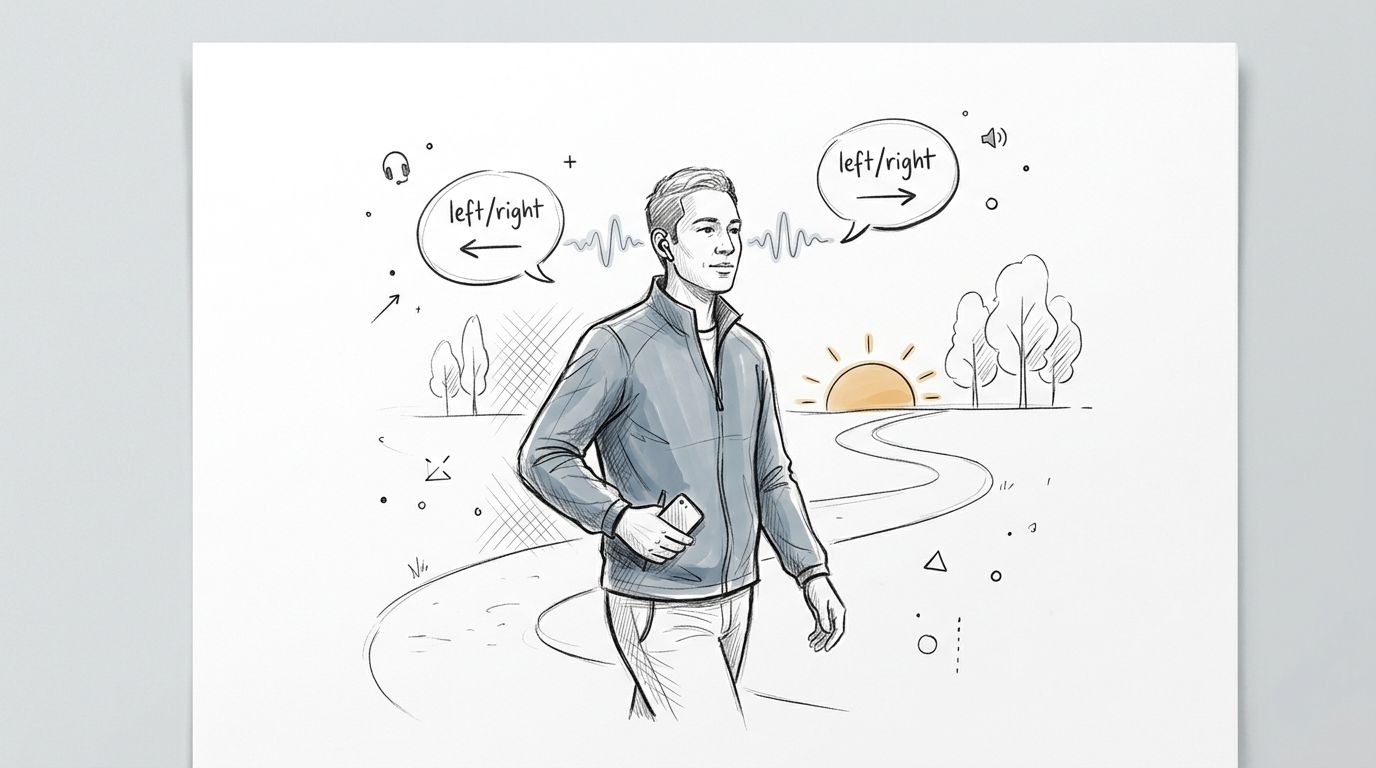
Walking is one of the most natural things to do while listening to audiobooks because your eyes stay on the path and your hands stay free. Audio-first interactive games are built for that kind of low-screen use, including walking, exercising, chores and cooking, as noted in Common Sense Media's description of audio adventure play. That same logic applies whether you're doing a park loop, a long ramble or a brisk walk before work.
Gydel works well here because it doesn't ask you to stare at a screen. You can let the narration carry the scene, then respond with simple controls or spoken actions. A quiet park path suits voice input better than a busy high street. For urban running or crowded pavements, button control is usually cleaner.
Choose the route to match the story
Outdoor listening works best when the path and the story ask for roughly the same amount of attention. Flat, familiar routes can support denser plots. Busy crossings, steep paths and rough ground can't.
A practical way to use Gydel is to keep shorter adventures for weekday walks and save longer ones for slower weekend outings. Standard and Premium plans use natural voices with better language and accent support, which can help outdoors where wind, traffic and distance all compete with the audio. Basic uses device voice, which is serviceable but can feel flatter depending on your phone and language.
For route ideas and genre pairings, Pathbind keeps a running set of audio adventure articles and guides that are useful if you're trying to work out what fits a walk versus a queue or a bedtime session.
- Test controls before you leave: Hardware button behaviour varies by device and earphones, so check it on a short walk first.
- Pause at busy crossings: Don't try to hold the plot together while judging traffic.
- Use richer audio outside: Natural voices and fuller sound design are easier to follow in open spaces.
A simple extra helps if you wear a watch on walks. A secure strap matters more than people think when you're adjusting layers, pockets and headphones, which is why gear guides such as this Samsung Galaxy Watch Ultra band guide can be surprisingly useful for regular outdoor listeners.
3. Household Chores and Cleaning
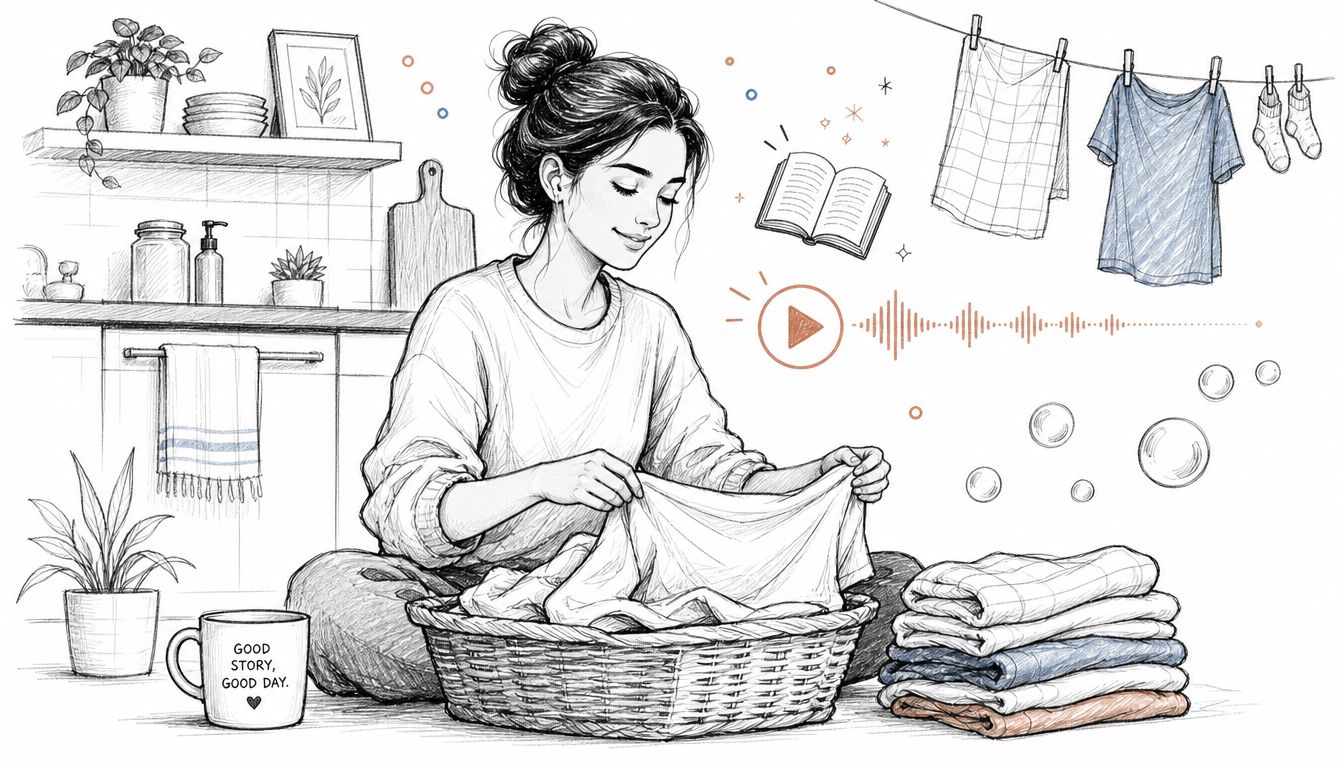
The washing-up bowl is full, a load of laundry needs folding, and the kitchen still needs a quick wipe down. Those jobs rarely need your full attention, which is why audio fits them so well. With an interactive story, that half-hour of housework stops being blank time. You can make a choice, hear the result, and keep moving.
Chores suit Gydel best when the task is repetitive and predictable. Washing up, tidying, folding clothes and simple meal prep all leave enough headroom to follow the scene and pick an action. The story becomes something you actively steer while your hands stay busy.
Some jobs are a poor match. Anything involving sharp tools, detailed measuring, repeated label-checking or a new recipe will pull attention away from the audio. In practice, the best test is simple. If the task already makes you stop and reread things, save the story for later.
Control method matters more indoors than people expect. Wet hands, spray bottles, rubber gloves and flour on your fingers all make screen taps annoying. Earphone button control is often the easiest option during cleaning, and spoken actions can work if the room is quiet enough. Gydel supports app controls, hardware earphone buttons and voice input, as shown on Gydel's App Store listing.
Household listening works best when the task has a steady rhythm and the story choices are easy to make in a few seconds.
A few pairings tend to hold up well:
- Laundry and general tidying: Good for stories with clear scene changes and short decision points.
- Washing up: Better for shorter sessions, because water noise and clatter can cover quieter narration.
- Batch cooking or basic prep: Fine if the recipe is familiar and you are not checking instructions every minute.
- Larger weekend cleans: Better with longer adventures, provided you are not being interrupted by calls, family requests or constant tool changes.
If children are in earshot while you tidy, choose age-appropriate categories and keep an adult involved. Adult supervision is recommended for younger audiences.
4. Waiting in Queues and Appointments
Waiting time often arrives in fragments. Ten minutes at the GP, fifteen in a post office queue, half an hour before a delayed train, twenty minutes before a restaurant table is ready. Those are awkward windows for video, and they're usually too stop-start for anything that needs your full visual attention.
Audio slips into these gaps easily. Gydel is especially useful here because live story generation means you're not trying to remember exactly where a chapter left off. You can enter a scene, make a few choices, pause, and come back without feeling as though you've abandoned a long fixed passage.
Short runs work best here
Shorter story sessions suit waiting rooms better than long dramatic arcs. If you know you'll be interrupted, choose a familiar world or a simpler premise so re-entry is easy.
The practical limit in these spaces isn't time. It's social pressure. In a quiet surgery or a packed airport gate, spoken actions may feel awkward or may disturb people nearby. Button control is the safer default, and if you're using headphones in a public place, keep enough awareness to hear your name called or a gate announcement.
- Use compact sessions: Fifteen to twenty minute story segments fit uncertain waits better than long adventures.
- Keep voice use situational: Quiet speech can work in open spaces, but not every waiting room is suitable.
- Pick stories with quick orientation: You don't want five minutes of setup if the appointment starts early.
This is also one of the clearest examples of how Gydel differs from audiobooks and podcasts. They're fixed listening formats, which can be perfect when you want continuity. Gydel is generated live around your choices, so it handles interruption more naturally.
5. Relaxing Evenings and Downtime
Evenings are where many people default to scrolling. It fills time, but it rarely feels restful. Audio gives your eyes a break, and interactive audio can give your mind just enough structure to stop it drifting back to messages, tabs and notifications.
That doesn't mean evenings are the best time for every kind of story. The calmer the setting, the more obvious the difference becomes between a fixed audiobook and a live interactive one. An audiobook gives you a stable narrative voice and pacing. Gydel gives you agency. You decide whether your character turns left, trusts the stranger, opens the letter, or leaves well enough alone.
This is where interactivity feels different
For some people, that extra involvement is more relaxing than passive listening because it replaces mindless scrolling with one clear thread of attention. For others, it's too active late at night. The only sensible approach is to match the format to your mood.
In Gydel, Basic uses device voice. Standard and Premium use natural voices with better language and accent support, plus richer music and sound effects on paid audio plans. In a quiet room, those differences are easy to notice. If you want a more polished evening listen, Standard or Premium tends to suit that use better.
A good evening setup is simple:
- Choose gentler genres: Cosy mystery, lighter fantasy and slower character-led stories work better than frantic action.
- Set a boundary first: Decide whether this is a twenty-minute wind-down or a full hour on the sofa.
- Use replay value well: Supported paid plans can preserve completed stories as audiobooks with MP3 export, which is useful for revisiting a favourite run.
If you want to see the app itself before deciding how it fits your evenings, the clearest starting point is Pathbind Games and Gydel.
6. Bedtime Listening and Sleep Routine
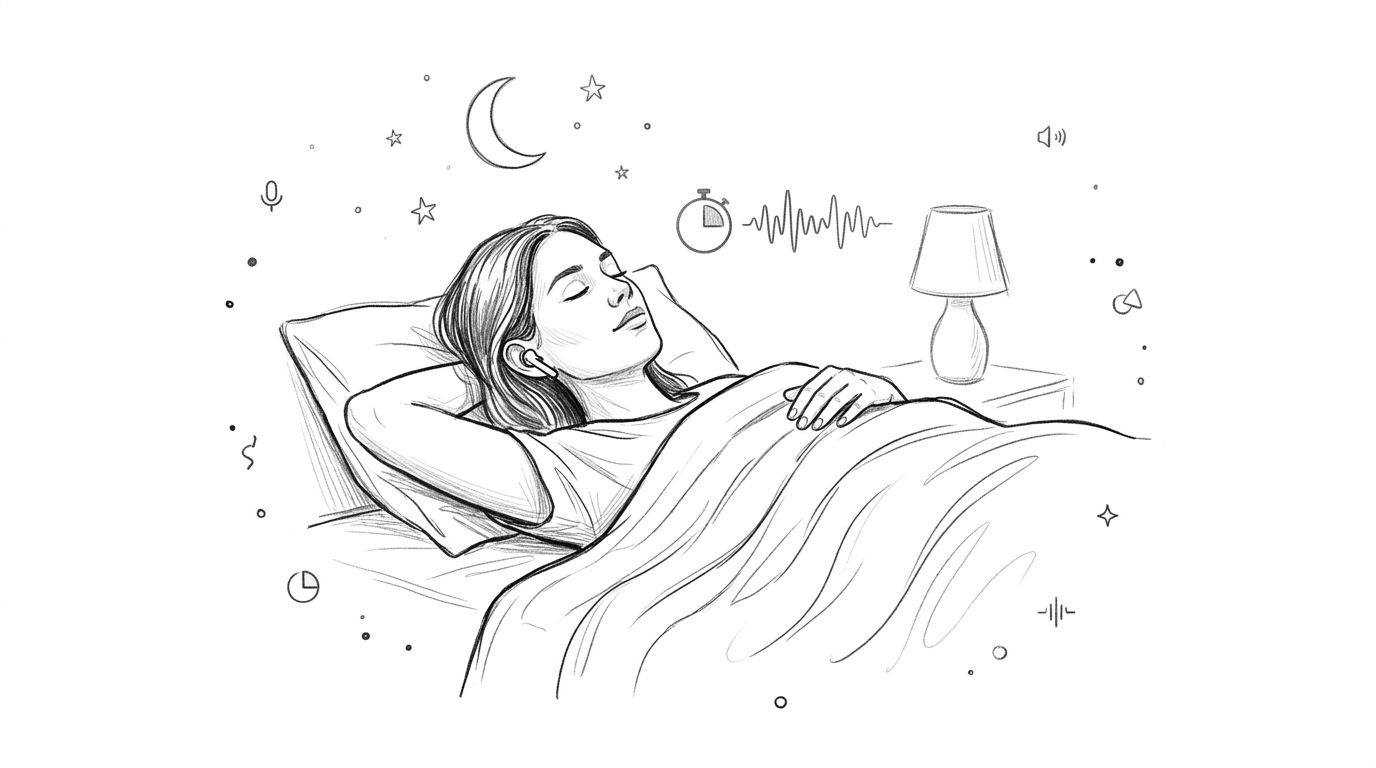
You get into bed, the lights are off, and there is a short stretch before sleep where your hands are still but your mind is not. That gap suits audio well. It turns idle time into a small piece of story time without putting a bright screen in front of you.
Bedtime listening works best when the setup asks very little of you. A sleep timer, low volume and a story you can leave halfway through all help. The aim is not to stay engaged for another hour. It is to give your attention one quiet place to rest.
Interactive audio can fit here, but the trade-off is obvious. Too much choice wakes you up. A small amount of choice can do the opposite, because it gives your mind a gentle task and stops it drifting back to tomorrow's to-do list. That is the useful angle at bedtime. Dead time becomes active story time, but only in a very light, controlled way.
Keep the friction low
At night, simple controls matter more than extra features. Button control is usually the better option because it is quiet and predictable. Voice control can still work, but it is more likely to disturb a partner or pull you back into full alertness.
Comfort matters too. Small wireless earbuds or slim headphones are often easier to wear in bed than bulkier sets, but side sleepers may prefer a single earbud or a pillow speaker. The right choice depends on how you sleep, not on what looks best on paper.
A practical bedtime setup usually looks like this:
- Choose slower stories: Cosier fantasy, gentle mystery and character-led plots are easier to stop without annoyance.
- Keep the session short: A brief listening window is usually enough to mark the shift from daytime to sleep.
- Use a timer or auto-pause: Stopping without reaching for your phone makes the routine easier to keep.
- Avoid high-stakes decisions: If the format is interactive, keep choices infrequent and low pressure.
Fixed audiobooks still suit many people better at bedtime, especially on restless nights when even minor decisions feel like effort. Interactive audio suits listeners who settle faster when they can guide the story a little before letting it go. Both approaches work. The better one is the one that helps you stop listening, rather than keep chasing the next chapter.
7. Commuting by Car
You are halfway through the drive to work, traffic is moving steadily, and the road ahead is familiar. That can be a good listening window. It is also a setting where poor timing stands out fast. Interactive audio works in the car only if the driving task stays in charge.
Car journeys can turn dead time into active story time, but only in short, sensible bursts. A simple choice at a red light or on a quiet dual carriageway can keep the story feeling involving. Busy roundabouts, poor weather and city traffic change the calculation. In those moments, a fixed audiobook is often the better fit.
Keep interaction rare and predictable
The safest car setup reduces decisions rather than adding them. If you use Gydel while driving, stick to stories that are easy to follow after interruptions and controls you can use by feel. Test any button controls on a short, familiar route before relying on them in daily traffic.
Voice input can work, but it has a clear trade-off. It saves you reaching for a device, yet speaking a command still takes attention, and misheard prompts are frustrating when the road already needs focus.
A practical setup usually looks like this:
- Choose lighter plots: Clear character goals and straightforward pacing are easier to pick up after a pause.
- Save choices for easy stretches: Use interactive moments on quiet roads, not during lane changes, junctions or parking.
- Set the volume carefully: Road noise can swallow dialogue, but louder is not always better if it masks traffic sounds.
- Pause early: If the route becomes demanding, stop the story before you start missing details from either the road or the plot.
Long drives suit audio well because repetition leaves room for listening. Interactive audio can improve that time by giving you small points of involvement instead of one passive stream. The limit is obvious. If a choice pulls too much attention from the road, it is the wrong format for that stretch.
Family journeys need a slightly different approach. If children can hear the story, keep the content age-appropriate and avoid stories with frequent prompts that could turn into back-seat debate just as you need to concentrate.
8. Errands and Shopping Trips
You leave the house for one quick job and end up doing four. A supermarket stop turns into a parcel collection, a pharmacy queue and a walk back with heavy bags. That broken rhythm is exactly why errands suit interactive audio in short bursts rather than one long session.
Gydel works best here when you treat the trip as a series of listening windows. The walk from the car park, the stretch between shops and the wait before checkout can all become active story time. Then you pause when the actual task starts. Reading labels, checking a list, paying for items and speaking to staff all need full attention.
That trade-off matters. Ordinary audiobooks can sit in the background more easily. Interactive audio asks for a small decision now and then, so timing matters more on errands than it does during simpler routines at home.
A practical approach is to use the story between tasks, not during them.
- Start on the move: Walking between stops is usually the clearest listening window.
- Pause before decisions: Price comparisons, medicine choices and substitutions are easier without split attention.
- Stop for any conversation: Cashiers, pharmacists and shop staff deserve your full focus.
- Keep the session short: Errands rarely give you a long, uninterrupted stretch, so shorter chapters or lighter scenes tend to work better.
Control method makes a difference too. Button input is usually the better fit in shops because it is quick, discreet and reliable in noisy spaces. Voice commands can work outside, but they are less useful once you are standing near tills, announcements and other people.
Used well, errands stop feeling like lost time. They become a set of small, choice-driven story moments threaded through the day.
9. Relaxation and Meditation Sessions
Not everyone wants pure silence when relaxing. Some people focus better with a gentle story thread in the background, especially if the alternative is mentally replaying the day. That's where slower interactive audio can fit. Not as formal meditation instruction, but as a calm structure for breathing, stretching or a quiet sit-down.
This only works if the story remains low-tension. If every choice feels urgent, relaxation disappears. The point is light participation, not constant problem-solving.
Choose low-tension worlds
Fiction still dominates audiobook listening, but non-fiction sales rose by 56% from 2015 to 2019 according to The Urban Writers' overview of audiobook growth. That matters here because it shows listeners don't only turn to audio for dramatic entertainment. They also use it for reflection, learning and quieter forms of engagement.
Gydel can support that calmer side when you choose the right world. Gentle fantasy, contemplative mystery and low-stakes adventures are usually better fits than horror or action-heavy scenarios.
Pick a story that lowers your mental tempo, not one that demands a performance.
A simple approach helps:
- Set a session length first: Twenty to forty minutes is enough for a calm block without overstimulation.
- Use minimal input: Button control keeps the body settled and the effort low.
- Aim for peaceful outcomes: If the app gives you options, choose the quieter path rather than the dramatic one.
Interactive audio doesn't replace meditation apps or silent practice. It's just another way to create a low-screen space when you want a little guidance without looking at anything.
10. Family Story Time and Parent–Child Bonding
Shared listening changes the mood completely. Instead of using audio to fill dead time alone, you use it to make a routine feel collaborative. Family car rides, weekend afternoons, or the gap before bed can all work well when the story invites everyone to vote on what happens next.
That's one place where Gydel stands apart from fixed audiobooks. Audiobooks are still excellent for shared listening, especially when you want a polished, uninterrupted narrative. Gydel is interactive and generated live, so the discussion becomes part of the activity. Children can argue for one path, parents can ask why, and the story responds to the choice.
Shared choices are the point
Interactive audio stories function as a hybrid between traditional audio listening and gaming because the player actively makes choices that change the unfolding narrative, as described in this discussion of mobile audiogames. That hybrid quality is exactly why families often enjoy them together. The story becomes something you build, not just receive.
For younger children, shorter sessions are usually easier to manage than long ones. Adventure and light fantasy also tend to suit shared decision-making better than genres with heavier themes. Child-friendly categories help, but adult supervision is recommended for younger audiences.
- Preview worlds first: Check tone and suitability before starting with children.
- Discuss choices out loud: The conversation is part of the fun.
- Keep it screen-light: Let the audio lead rather than turning it into another device-centred activity.
Supported paid plans can also preserve completed adventures as audiobooks with MP3 export, which gives families a simple way to replay stories they created together.
10 Activities to Pair with Audiobooks
| Activity | Implementation Complexity 🔄 | Resource Requirements ⚡ | Expected Outcomes ⭐📊 | Ideal Use Cases | Key Advantages 💡 | |---|---:|---:|---:|---|---| | Commuting and Public Transport | Low, simple earphone/voice setup; manage noisy stops 🔄 | Noise‑isolating earphones; paid audio plan for full sound; offline downloads recommended ⚡ | Converts commute time into engaging, replayable stories; variable outcomes ⭐📊 | Trains, buses, subways; 20–45 min journeys | Hands‑free, screen‑off entertainment; fresh outcomes; saves to Library 💡 | | Walking and Outdoor Exercise | Low, works while moving; test controls before use 🔄 | Reliable earphones; Standard/Premium for richer audio; safe route choice ⚡ | Makes exercise feel shorter and more engaging; supports longer sessions ⭐📊 | Parks, hikes, fitness walks; 20–90 min | Enhances workouts; no screen glare; live story generation 💡 | | Household Chores and Cleaning | Low, hands‑free recommended; avoid messy interactions 🔄 | Earphones; Standard/Premium for clarity; use button controls during wet/messy tasks ⚡ | Reduces monotony; higher mental engagement; pause/resume friendly ⭐📊 | Laundry, washing up, vacuuming; 20–90 min | Transforms chores into narrative time; repeatable branches; library saves 💡 | | Waiting in Queues and Appointments | Low, designed for short, interrupted sessions 🔄 | Earphones; short‑format stories; prefer non‑verbal controls in quiet spaces ⚡ | Lowers perceived wait time; quick bursts of engagement ⭐📊 | Doctor's waiting rooms, short queues; 10–45 min | Quick, pausable segments; fits fragmented time blocks 💡 | | Relaxing Evenings and Downtime | Low, quiet environment; choose calming genres 🔄 | Earphones; Standard/Premium for ambience; MP3 export available on some plans ⚡ | Calming engagement; avoids screen fatigue; can export favourites ⭐📊 | Post‑work wind‑down; 45–60 min sessions | Immersive relaxation; pause/resume; exportable audio 💡 | | Bedtime Listening and Sleep Routine | Low–Moderate, require low‑tension pacing and timers 🔄 | Quiet earphones; Standard/Premium for natural narration; timers/auto‑pause advised ⚡ | Can settle busy minds if paced correctly; risk of overstimulation for some ⭐📊 | Pre‑sleep routines; short 20–30 min segments | Screen‑off listening; easy pause; calming narration options 💡 | | Commuting by Car | Moderate, safety focus; hands‑free reliability important 🔄 | Reliable earphone hardware buttons; Standard/Premium to compete with road noise ⚡ | Shortens perceived drive time; keeps focus if stories are low‑intensity ⭐📊 | Solo drives, commutes; 45–90 min | Hands‑free operation; reduces monotony; varies outcomes on repeat trips 💡 | | Errands and Shopping Trips | Low, fragmented time; frequent pausing expected 🔄 | Earphones; short segments (15–30 min); non‑verbal controls preferred in busy shops ⚡ | Makes errands more purposeful and engaging; supports interruptions ⭐📊 | Multi‑stop shopping, quick errands; 15–30 min | Pause/resume friendly; screen‑free awareness; fresh narrative each run 💡 | | Relaxation and Meditation Sessions | Moderate, requires selecting low‑tension worlds and intention setting 🔄 | Calm environment; earphones; Standard/Premium for atmospheric sound ⚡ | Supports relaxation as a complement to practice; not a replacement for silent meditation ⭐📊 | Dedicated relaxation time; 20–40 min sessions | Gentle interactive grounding; slow‑paced worlds for calm focus 💡 | | Family Story Time & Parent–Child Bonding | Moderate, content preview and coordination needed 🔄 | Child‑friendly content; shared listening setup or exports; supervision advised ⚡ | Encourages conversation and bonding; repeatable family experiences ⭐📊 | Car trips with kids, family bedtime; 15–20 min | Interactive family engagement; screen‑free bonding; exportable keepsakes 💡 |
Choosing Your Next Audio Adventure
The best things to do while listening to audiobooks haven't really changed. Commute. Walk. Clean. Queue. Shop. Wind down. Get through the ordinary parts of the day with something worth hearing. What has changed is the range of audio formats that can fit those moments.
A traditional audiobook is still hard to beat when you want consistency. The narration is fixed, the pacing is deliberate, and the story has been shaped from beginning to end. That's useful when your attention is limited and you don't want to make decisions. It's also ideal when the writing itself is the main attraction and you want to experience the book exactly as produced.
Interactive audio serves a different mood. Gydel doesn't act like a podcast, audiobook, chatbot or ordinary mobile game. It's a live AI audio adventure app that builds scenes around your choices as you go. On paid audio plans, it adds narration, music and sound effects. It's designed for low-screen or screen-off moments such as walking, commuting, waiting, chores, relaxing and bedtime listening.
That difference matters most when dead time starts to feel stale. A fixed audiobook can make washing up or sitting on a train more pleasant. Gydel can make the same time feel participatory. You're not only following a plot. You're steering it. That doesn't mean it replaces audiobooks. It means it gives you another option for the moments when passive listening feels too passive.
There are trade-offs, and they're worth being honest about. Interactive audio works best during low-brain activities. If the task becomes mentally demanding, any story can suffer. One gap in mainstream advice is exactly this problem: matching audio complexity to task intensity. Libby Life highlights that 68% of audiobook listeners lose plot focus when the physical task requires more than minimal cognitive engagement in its discussion of what to do while listening. That's a good rule for Gydel as well. Keep denser stories for simpler tasks. Keep simpler stories for busier environments.
Control method matters too. Earphone hardware buttons are often the cleanest option in public or during chores, but compatibility depends on the earphones and device. Spoken actions can feel natural on a walk or at home, though they're less practical in queues, shared spaces or noisy streets. Basic uses device voice, while Standard and Premium use natural voices with better language and accent support, so the right plan depends on how much audio quality matters in your usual settings.
In the end, the right choice is simple. If you want a fixed story, press play on an audiobook. If you want the story to answer back, try an interactive one. Use the format that matches the moment.
---
Pathbind Games makes Gydel, an installable AI audio adventure app for people who want more from no-screen time. It creates stories live around your choices, with simple controls, optional spoken actions, and paid audio plans that add narration, music and sound effects. If your walks, commutes, queues or chores already belong to audiobooks, Gydel is worth trying when you want those same moments to become playable story time instead.
Play a live AI audio adventure for spare moments, walks, commutes or bedtime. Open the app.